A video portfolio does not stay static.
A video editor adds new work, changes video order, and needs to present different project types without mixing everything into one wall of embeds.
Alin's important content was already on YouTube. The site needed to present it clearly, by category, without turning every new video into a development request.
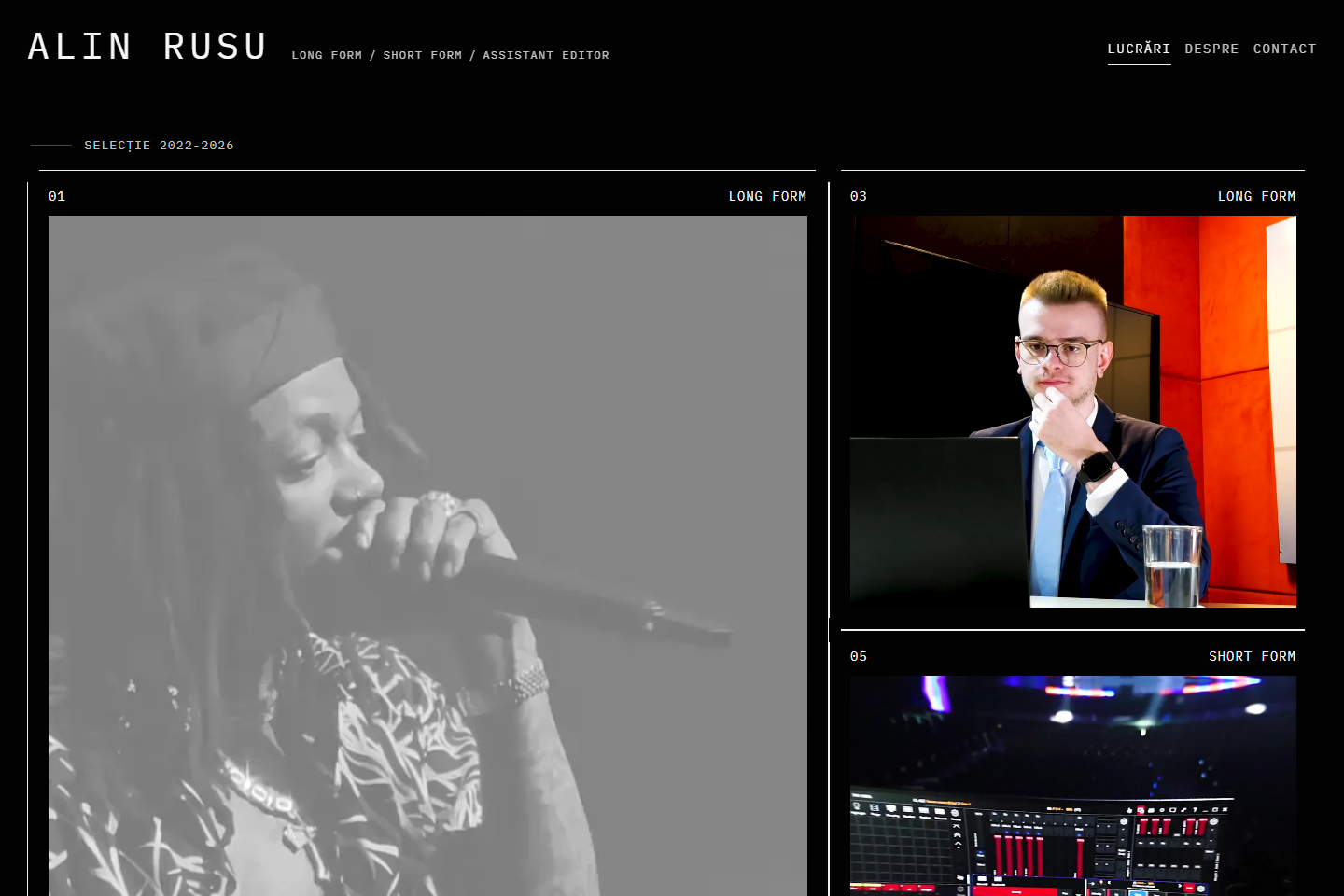
A video editor adds new work, changes video order, and needs to present different project types without mixing everything into one wall of embeds.
The site reads the work structure from playlists and clear categories. Alin publishes where he already works, and the site presents that material in a cleaner form.
He can manage order and content from a familiar place, while the public site stays fast, static, and easy to host.
Not every client needs a CMS. Here, a new dashboard would have meant another account, another interface, and another place where content could fall behind.
YouTube playlists are already the working interface: upload, title, thumbnail, order, and visibility. The site uses that organization and turns it into a controlled visual portfolio, with category pages that can also show useful metadata such as view counts.
“Very happy with the collaboration! He moved fast, took all my wishes into account, and delivered exactly what I wanted. I confidently recommend him!”
Alin Rusu
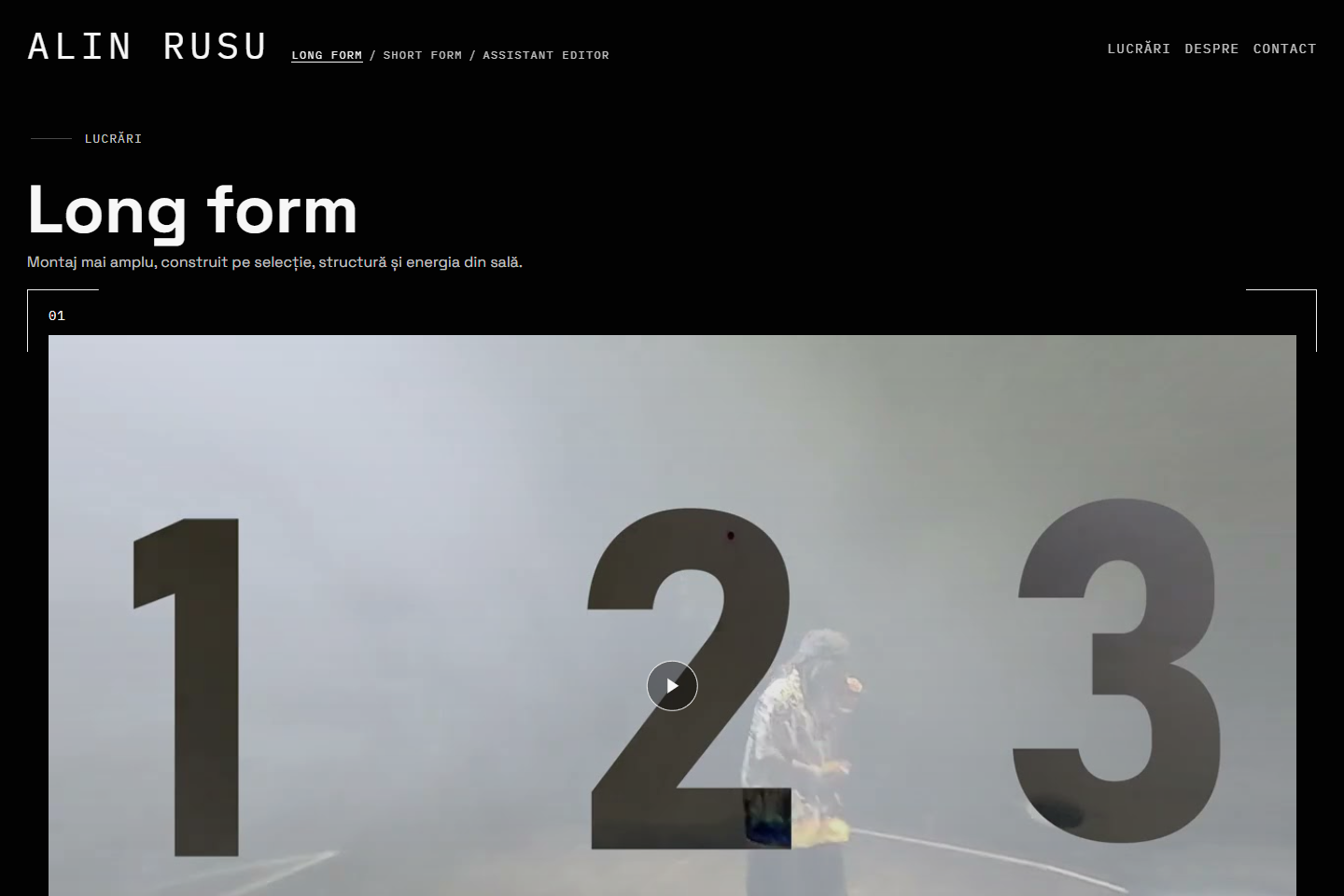
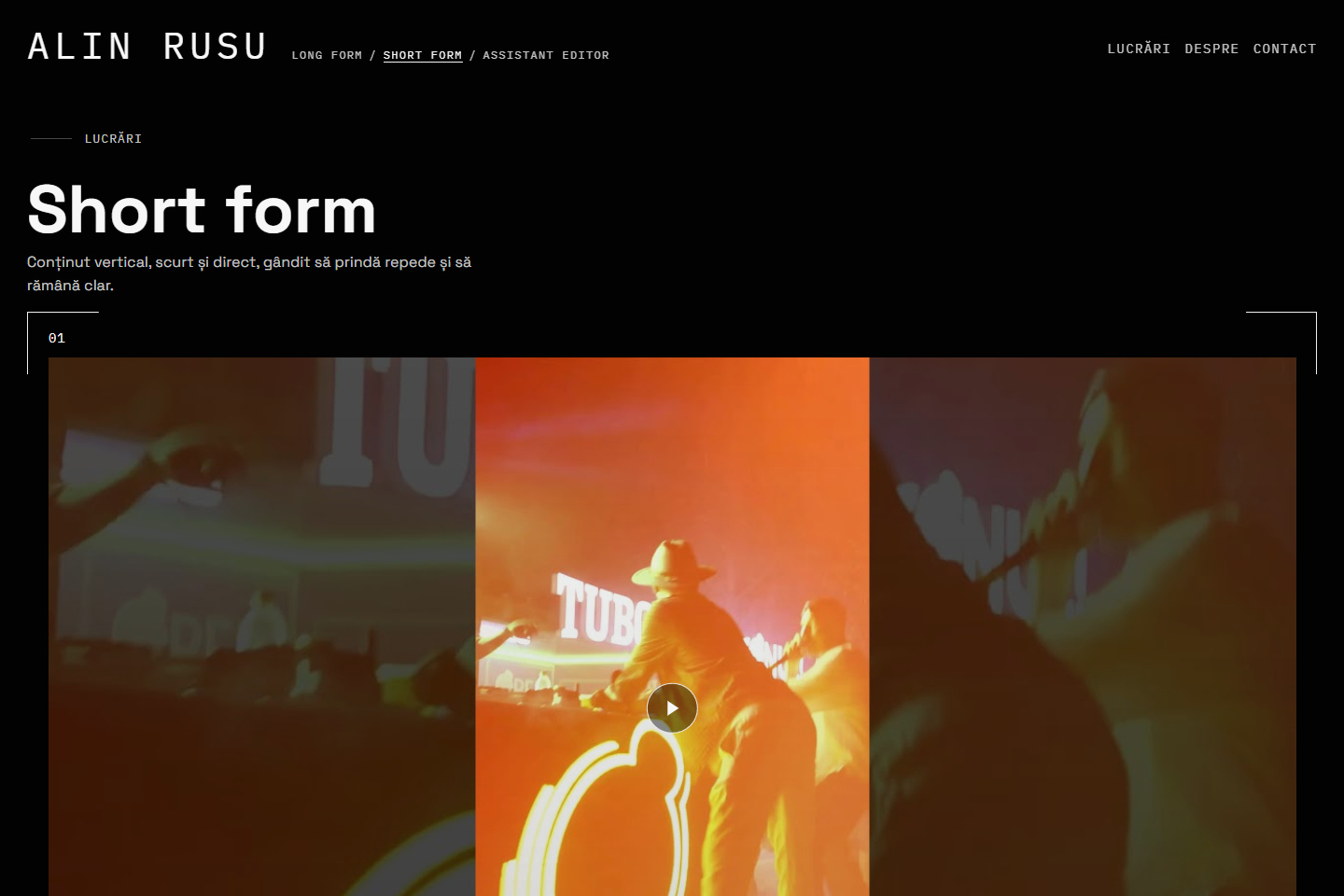
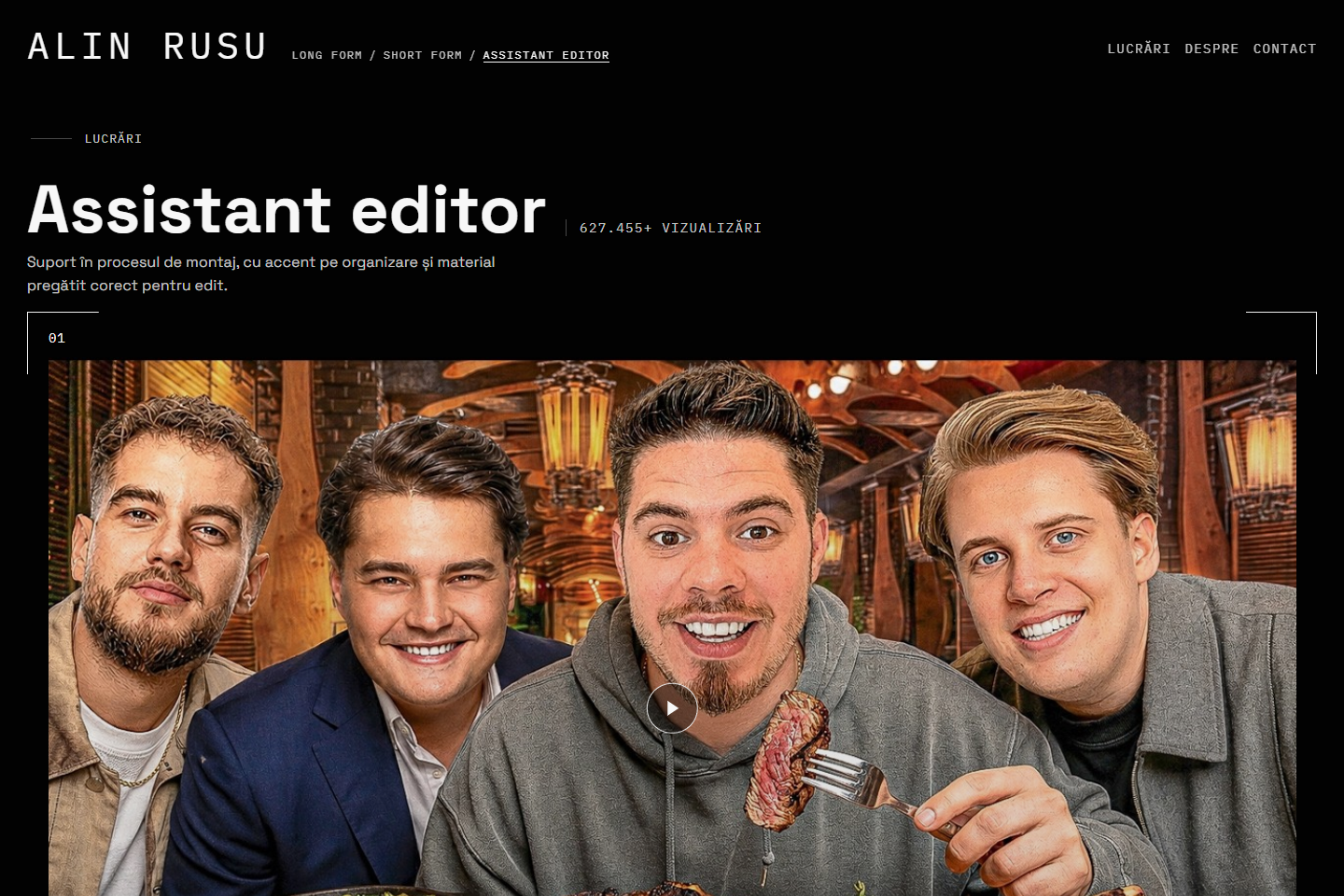
For video portfolios, the best CMS may be the platform where the client already works. The site's role is to turn that source into a coherent, fast, easy-to-understand presentation.
discuss a connected portfolio